

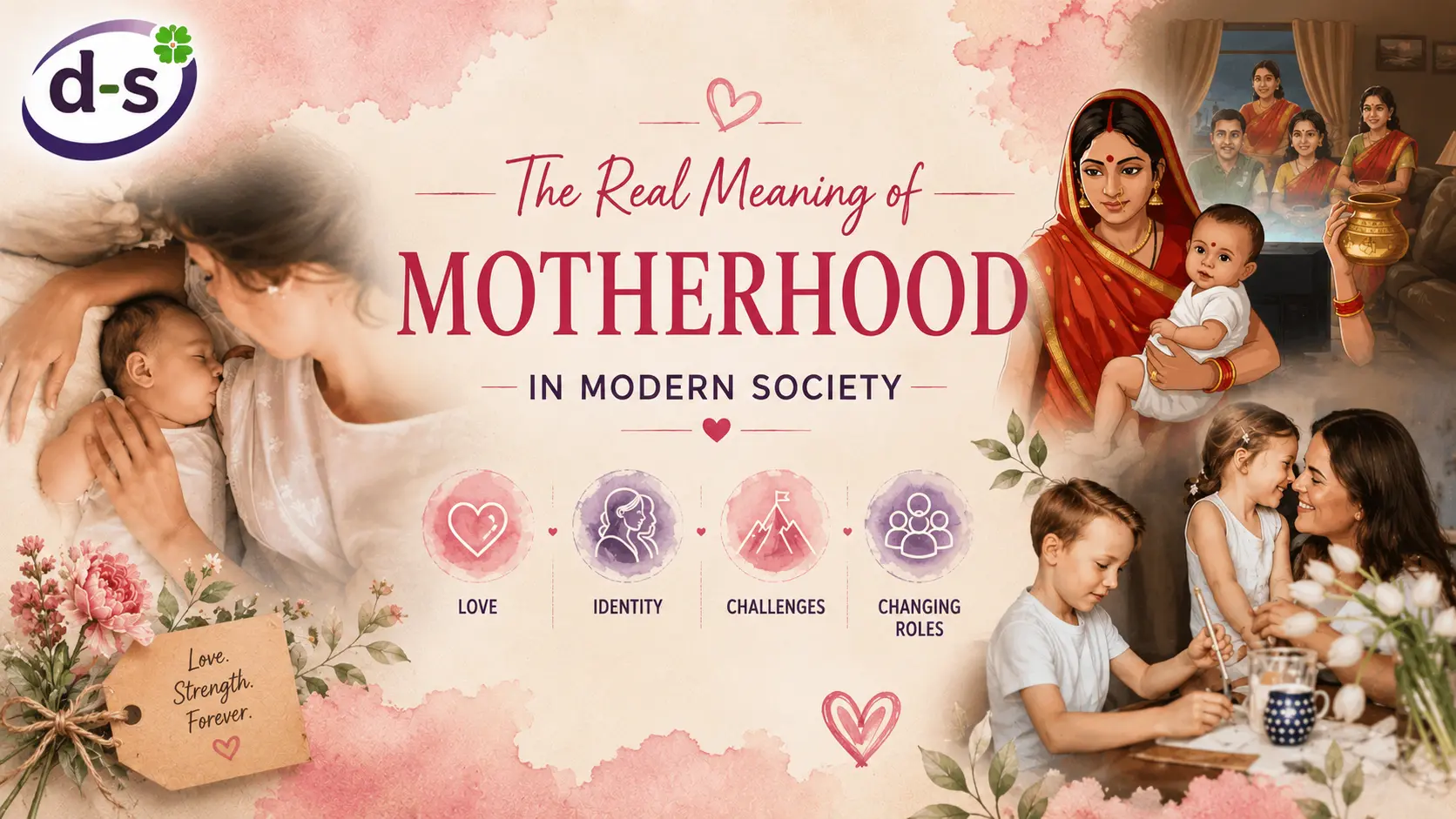
Motherhood has always been one of the most powerful and emotional experiences in human life. But in modern society, the meaning of motherhood is changing in many ways. Today, motherhood is not limited to raising children inside the home. Modern mothers are balancing careers, relationships, personal dreams, emotional responsibilities, and social expectations while still carrying the deep responsibility of nurturing and guiding children.
For many women, motherhood is no longer a single role. It is now a mix of care, identity, emotional strength, work, sacrifice, growth, and personal transformation. At the same time, society is also slowly beginning to understand that motherhood exists in many forms — biological mothers, adoptive mothers, foster mothers, grandmothers, stepmothers, mentors, teachers, and caregivers all play important nurturing roles.
Modern motherhood is deeply meaningful, but it also comes with invisible pressures that are often ignored.
What Is the Real Meaning of Motherhood Today?
The real meaning of motherhood today goes far beyond giving birth. Modern motherhood is about love, emotional care, guidance, support, protection, and helping another person grow through life.
For many women, becoming a mother changes the way they see themselves and the world around them. Mothers often describe motherhood as a life-changing emotional experience that reshapes priorities, relationships, goals, and identity.
At the same time, modern society has expanded the idea of motherhood itself. A person can “mother” through care, emotional support, teaching, mentoring, or raising children who are not biologically their own.
Today, motherhood is increasingly understood as:
- Caring deeply for another human being
- Creating emotional safety and stability
- Teaching values, empathy, and compassion
- Supporting growth and development
- Balancing care for others while maintaining one’s own identity
Motherhood Is No Longer One Fixed Role
In earlier generations, motherhood was often connected mainly to home-making and childcare. Society expected mothers to sacrifice personal ambitions and focus almost entirely on family responsibilities.
Modern life has changed these expectations.
Today’s mothers may:
- Work full-time careers
- Run businesses
- Study or continue education
- Lead communities
- Raise children independently
- Share parenting responsibilities with partners
- Choose non-traditional family structures
Because of these changes, motherhood has become more layered and complex than ever before.
The Emotional Side of Motherhood
One of the strongest parts of motherhood is the emotional bond between a mother and child. Many mothers describe feeling a permanent emotional connection that changes their understanding of love, responsibility, and purpose.
Motherhood often brings:
| Emotional Experience | Meaning |
|---|---|
| Deep Attachment | Strong emotional bond with children |
| Responsibility | Constant awareness of a child’s needs |
| Empathy | Greater understanding of emotions and care |
| Personal Growth | Emotional maturity and patience |
| Purpose | Feeling of meaning and direction in life |
Many women say motherhood helps them become more emotionally aware, compassionate, and resilient not only within family life but also in relationships, careers, and communities.
The Invisible Pressures of Modern Motherhood
While motherhood can be deeply meaningful, modern mothers also face enormous pressure from society.
Today’s mothers are often expected to succeed in every area of life at the same time. Society encourages women to build careers, maintain relationships, manage homes, raise emotionally healthy children, stay physically and mentally well, and still appear calm and organized.
This pressure creates emotional exhaustion for many mothers.
Common Pressures Modern Mothers Face
The Mental Load
A large part of motherhood is invisible work. Mothers often carry the mental responsibility of remembering schedules, appointments, school activities, meals, routines, emotional needs, and household planning.
This constant mental management is known as the “mental load.”
Career vs Family Pressure
Modern mothers are often judged regardless of their choices.
- Working mothers may feel guilty for not spending enough time with children.
- Stay-at-home mothers may feel undervalued or financially dependent.
Many women feel pressure to prove themselves both at work and at home.
Public Expectations
Social media and modern culture sometimes create unrealistic images of the “perfect mother” who is always patient, productive, healthy, successful, and emotionally available.
This can create anxiety, comparison, guilt, and burnout.
Mental Health Challenges
Many mothers quietly struggle with:
- Stress
- Anxiety
- Loneliness
- Emotional exhaustion
- Identity loss
- Postpartum depression
- Burnout
Yet many still feel expected to appear grateful and emotionally strong all the time.
Working Motherhood in Modern Society
Modern motherhood has changed the relationship between work and parenting. Today, many women combine careers and motherhood at the same time.
For some mothers, work is:
- A financial necessity
- A personal ambition
- A source of identity and confidence
- A way to contribute to society
Working motherhood is no longer seen as the opposite of caregiving. Many mothers now believe they can nurture children while also pursuing personal goals and professional success.
At the same time, balancing both responsibilities can be emotionally and physically demanding.
Motherhood and Identity
One of the biggest changes in modern society is the growing recognition that motherhood should not erase a woman’s individuality.
Many mothers today are redefining what sacrifice means. Instead of completely giving up personal identity, modern motherhood increasingly focuses on balance.
This includes:
- Maintaining hobbies and interests
- Returning to work after childbirth
- Setting healthy boundaries
- Taking care of mental health
- Continuing personal growth
Modern mothers are showing that caring for children and caring for oneself can exist together.
Motherhood Around the World
Different countries and cultures shape motherhood in different ways. Social expectations, family systems, government policies, and cultural traditions all influence the daily experiences of mothers.
Country-Wise View of Modern Motherhood
| Country/Region | Common Experience of Motherhood |
|---|---|
| India | Deep respect for mothers, strong family expectations, balancing tradition and career |
| United States | Focus on independence, but high pressure to “do it all” |
| Japan | Strong social respect for mothers but heavy parenting expectations |
| Nordic Countries | Better work-life balance and shared parenting support |
| Latin America | Strong family-centered motherhood and community support |
| African Communities | Shared caregiving and community-based child raising traditions |
Even though motherhood looks different across cultures, emotional care and family connection remain central everywhere.
Motherhood Beyond Biology
Modern society is also broadening the meaning of motherhood itself.
Today, many people recognize that motherhood is not defined only by childbirth.
Motherhood can also include:
- Adoptive mothers
- Foster mothers
- Stepmothers
- Grandmothers raising grandchildren
- Guardians and caregivers
- Teachers and mentors
- Women who provide emotional care and guidance
Many people now view “mothering” as an act of nurturing, protection, and support rather than only a biological relationship.
Also See: What is Mother’s Day and Why is It Celebrated? History, Meaning & Global Traditions
The Importance of Support for Mothers
One of the biggest conversations around modern motherhood is the need for better support systems.
Experts and families increasingly recognize that mothers need emotional, financial, and social support to maintain healthy lives.
Important Support Mothers Need
| Support Type | Why It Matters |
|---|---|
| Paid parental leave | Helps mothers recover and care for newborns |
| Affordable childcare | Reduces stress for working families |
| Shared parenting | Balances responsibilities more fairly |
| Mental health support | Helps mothers manage stress and emotional challenges |
| Social understanding | Reduces guilt and unrealistic expectations |
When mothers feel supported, families and communities also become stronger.
The Changing Definition of Sacrifice
Motherhood will always involve sacrifice in some form. But modern society is beginning to challenge the idea that mothers must completely lose themselves in order to be “good mothers.”
Many women now believe motherhood should include:
- Love without self-erasure
- Care without losing identity
- Responsibility without constant guilt
- Family life alongside personal fulfillment
This shift is helping create healthier conversations around parenting, equality, and emotional well-being.
Why Motherhood Still Matters Deeply in Society
Even in a rapidly changing world, motherhood continues to hold enormous emotional and social importance.
Mothers often shape:
- Early emotional development
- Family stability
- Social values and empathy
- Education and discipline
- Emotional security for children
Whether through biological parenting, adoption, caregiving, mentoring, or emotional support, mothering continues to influence families and society in meaningful ways.
Final Thoughts
The real meaning of motherhood in modern society is no longer limited to one traditional definition. Today, motherhood is emotional, personal, complex, and constantly evolving. It includes care, resilience, identity, sacrifice, growth, and unconditional support.
Modern mothers are balancing family life with careers, mental health, relationships, and personal dreams while continuing to nurture others with love and dedication.
At the same time, society is slowly learning that motherhood exists in many forms. Biological mothers, adoptive mothers, foster mothers, grandmothers, teachers, mentors, and caregivers all contribute through acts of nurturing and emotional care.
In the end, motherhood is not simply about giving birth. It is about showing up with love, support, compassion, and strength — even during life’s most difficult moments.