

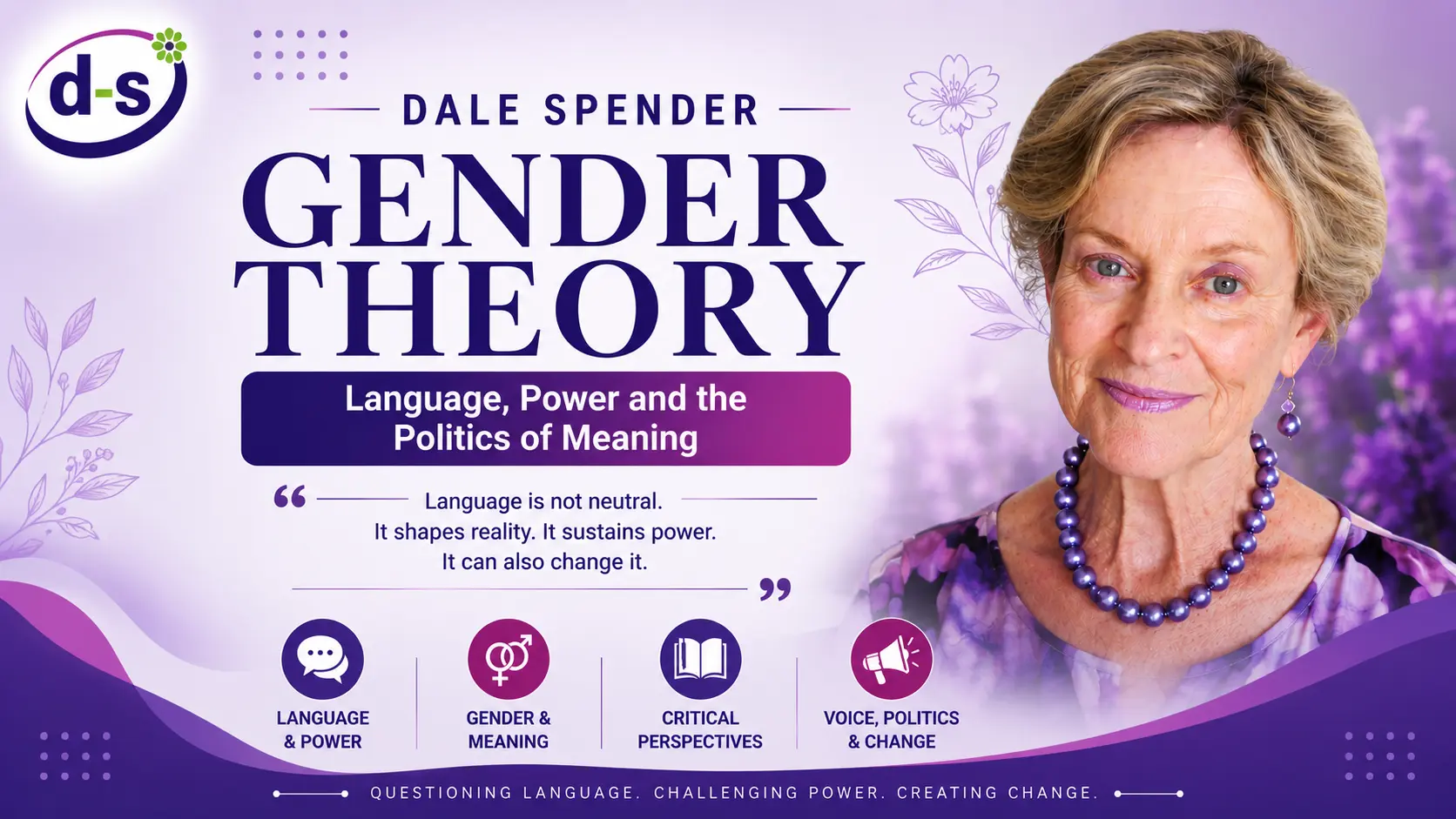
Dale Spender’s gender theory remains one of the most influential explanations of how inequality is built into everyday life. Her central argument was bold but clear: gender inequality is not only social or economic — it is also linguistic and symbolic.
She believed that the way we classify, name, and describe the world plays a powerful role in maintaining male dominance. Her ideas continue to shape debates on communication, education, feminism, and digital knowledge today.
The Core of Dale Spender’s Gender Theory
At the heart of her theory is one powerful idea:
Language helps construct reality.
Spender argued that language is not neutral. It does not simply describe the world. Instead, it:
- Organizes experience
- Sets standards of “normal”
- Assigns value to categories
And in a society shaped by male power, those linguistic rules often place men at the center.
Male as Norm: The Foundation of the Theory
One of her most important ideas is the concept of “male as norm.”
What Does It Mean?
In many systems of thought:
- Male is treated as the standard human
- Female is defined in comparison to male
This creates a classification system that divides people into:
| Category | Status in Traditional Order |
|---|---|
| Plus Male | Standard / Positive |
| Minus Male | Deviation / Secondary |
This structure does not appear openly aggressive. Instead, it becomes embedded in everyday meaning.
Language and Power: How Meaning Supports Authority
Spender distinguished between:
- Male superiority (a myth)
- Male power (a social reality)
She argued that the myth of male superiority supports male power. Language helps maintain this myth by reinforcing certain meanings.
For example:
- Positive traits are often linked to masculinity
- Negative traits are often attached to femininity
- Leadership qualities are coded as male
- Emotional expression is coded as female
Over time, these patterns appear natural, even though they are socially created.
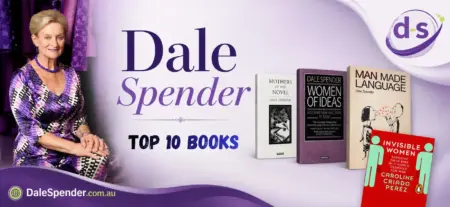
Read more: Top 10 Books by Dale Spender
Constructing Reality Through Rules
Spender explained that societies create “rules for meaning.” These rules:
- Tell us what is normal
- Decide what counts as valuable
- Shape how we interpret events
When people repeatedly follow these rules, they reinforce them. The system becomes self-validating.
| Element | Role in Gender Theory |
|---|---|
| Language | Classifies the world |
| Meaning Rules | Define positive and negative |
| Social Order | Reinforces hierarchy |
| Power | Maintains control |
Gender and Education
Spender’s theory extends into education.
In many classrooms:
- Boys dominate discussions
- Girls speak less despite equal ability
- Confidence is shaped by participation
If language and classroom rules value assertiveness coded as masculine, then students who fit that model gain more visibility.
This affects:
- Leadership development
- Academic confidence
- Career direction
Education does not only transmit knowledge. It also transmits meaning and social order.
Gender and Communication
Research on communication patterns supports part of Spender’s argument. In mixed conversations:
- Men interrupt more frequently
- Men hold the floor longer
- Women are judged more harshly for assertiveness
This does not mean women are weaker communicators. It shows how conversational rules reflect power.
Spender emphasized that the problem is not women’s speech. The problem is how speech is evaluated within a system that values male dominance.
The Debate Around Her Theory
Her ideas sparked strong discussion.
Some critics questioned whether language truly “creates” reality. They argued that language evolves through shared social use rather than deliberate invention.
However, even critics agreed on one point:
Language carries bias.
Spender’s strength was not only in offering answers, but in forcing society to confront uncomfortable questions.
Digital Knowledge and New Learning
Later in her work, Spender explored how technology and digital communication could change power structures.
She believed that:
- Digital literacy creates new forms of knowledge
- Information becomes a new type of wealth
- Online spaces can challenge traditional hierarchies
This shows that her gender theory was not limited to the past. It also looked toward future transformation.
Key Ideas in Simple Form
| Idea | Meaning |
|---|---|
| Language is not neutral | It reflects social power |
| Male as norm | Men treated as default human |
| Myth of superiority | Belief used to justify control |
| Meaning rules | Socially created, not natural |
| Change is possible | Rules can be questioned and reshaped |
Why Dale Spender’s Gender Theory Still Matters
Today, discussions about:
- Gender bias in media
- Equal pay and leadership
- Representation in education
- Inclusive language
all connect to her central insight — that inequality is built into systems of meaning.
Understanding how meaning is constructed helps people see that inequality is not inevitable. It is created, reinforced, and therefore capable of being transformed.
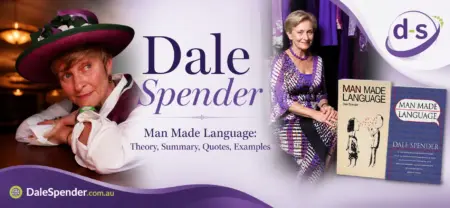
Like to Read? Dale Spender Man Made Language: Theory, Summary, Quotes, Examples
Dale Spender’s gender theory challenges the idea that society is neutral. It asks readers to look deeper — not only at who holds power, but at how language and classification systems quietly support that power.
Her work continues to inspire discussions about equality, communication, education, and digital knowledge. By questioning meaning itself, she opened space for new possibilities.
FAQs
What is Dale Spender’s gender theory?
It explains how language and symbolic systems support gender inequality.
What does “male as norm” mean?
It means society treats men as the default standard for humanity.
Did she believe language creates inequality?
She argued that language helps construct and maintain inequality.
Can these patterns change?
Yes. Meaning systems can shift when society challenges them.
Why is her theory important today?
Because debates about gender, communication, and representation still involve questions about language and power.