

Communication between men and women has always been a topic of discussion. Many people believe that men and women speak differently, think differently, and even understand language in different ways. But how much of this is true, and how much is just a myth?
In today’s world, where awareness about equality and communication is growing, it is important to understand the real difference between male and female communication.
Why This Topic Matters Today
Communication is not just about talking — it is about power, understanding, and influence.
- In workplaces, communication affects leadership
- In relationships, it affects understanding
- In society, it shapes how voices are heard
That’s why the debate around male vs female communication is still very relevant.
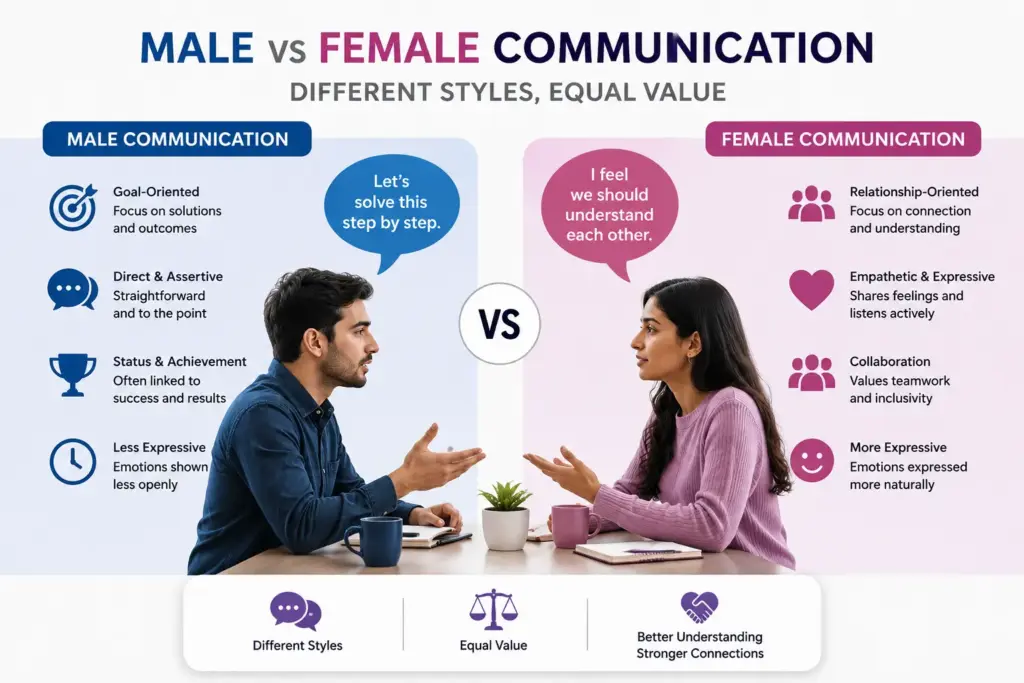
Myths vs Reality: Quick Comparison
| Myth | Reality |
|---|---|
| Women talk more than men | Men often dominate conversations |
| Men are logical, women are emotional | Both use logic and emotion |
| Women are weak communicators | Women are often ignored, not weak |
| Men are better speakers | Confidence is shaped by social power |
| Women gossip more | Both genders share information differently |
Read more: Dale Spender Man Made Language
Myth 1: Women Talk More Than Men
Reality
This is one of the most common beliefs. However, in many real-life situations like meetings, classrooms, or public discussions:
- Men often speak more
- Men interrupt more frequently
- Women speak less when not encouraged
The issue is not that women talk more — it is that men are often given more space to speak.
Myth 2: Men Are Logical, Women Are Emotional
Reality
This idea creates a false image:
- Men are seen as rational
- Women are seen as emotional
But in real communication:
- Both men and women use logic and emotions
- Expression depends on situation, not gender
The difference is often in how society labels behavior, not the behavior itself.
Myth 3: Women Are Weak Communicators
Reality
Women are not weak communicators. The real issue is:
- Women’s ideas are sometimes ignored
- Their speech is judged more strictly
- They are interrupted more often
The problem is not how women speak, but how they are heard.
Communication in Workplace
What Happens in Reality
| Situation | Common Pattern |
|---|---|
| Meetings | Men speak more frequently |
| Leadership roles | Male communication seen as confident |
| Female leaders | Often labeled “aggressive” |
| Ideas sharing | Women’s ideas sometimes overlooked |
Same communication style is judged differently based on gender.
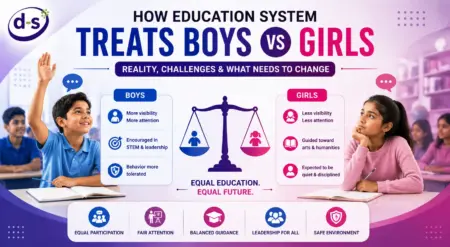
Communication in Education
In schools and colleges:
- Boys are often more encouraged to speak
- Girls may stay silent even when they know answers
- Teachers sometimes give more attention to outspoken students
This affects confidence and communication skills over time.
The Role of Language in Communication
Language plays a big role in shaping communication patterns.
Examples:
- Words like “bossy” for women and “leader” for men
- Phrases that normalize male behavior
- Labels that limit women’s expression
Language influences how communication is understood.
Modern Changes in Communication
Today, things are changing:
- Social media gives equal voice to everyone
- More women are speaking in public platforms
- Awareness about gender bias is increasing
But challenges still exist:
- Online trolling
- Bias in professional spaces
- Unequal representation
What Actually Creates Communication Differences?
It is not just gender — many factors play a role:
Social Conditioning: People learn how to speak based on upbringing
Power and Position: Those in power speak more confidently
Environment: Workplace, culture, and education affect communication
Confidence Levels: Confidence is built over time, not fixed by gender
| Factor | Impact on Communication |
|---|---|
| Society | Shapes behavior |
| Language | Influences meaning |
| Power | Controls voice |
| Education | Builds confidence |
| Culture | Defines roles |
What Needs to Change
To improve communication equality:
- Encourage equal participation
- Listen actively without bias
- Avoid labeling communication styles
- Create safe spaces for expression
Read more: Problems Faced by Women in Schools & Colleges
The idea that men and women communicate in completely different ways is mostly a myth. The real difference comes from how society shapes communication and how people respond to it.
When we remove bias and listen equally, communication becomes clearer, stronger, and more meaningful for everyone.
FAQs
Do women really talk more than men?
Not always. In many formal situations, men actually speak more.
Why are women seen as emotional speakers?
Because of social stereotypes, not actual communication patterns.
Can communication style change?
Yes, it changes with environment, experience, and awareness.
What is the biggest issue in communication today?
Being heard and understood equally.
Is gender the only factor in communication?
No, many factors like culture, education, and confidence matter.