



Productivity books are more popular than ever in 2026. In a world filled with constant notifications, social media distractions, endless meetings, and mental overload, millions of people are searching for practical ways to improve focus, manage time better, and reduce stress while still achieving meaningful results.
Modern productivity is no longer only about waking up at 5 AM or working nonstop for long hours. The latest generation of productivity books focuses on sustainable performance, better habits, mental clarity, deep focus, energy management, and creating systems that make life easier instead of more exhausting.
From entrepreneurs and students to remote workers and business leaders, readers are now turning toward books that teach how to work smarter without sacrificing health, creativity, or personal life. Some books focus on building habits, others on deep concentration, while newer titles explore happiness, burnout prevention, and digital overload.
The productivity category has evolved far beyond simple time management. Today, the best books combine psychology, neuroscience, routines, creativity, and behavioral science to help people become more effective in every area of life.
Why Productivity Books Continue to Dominate Self-Improvement Trends
The biggest reason productivity books remain successful is simple: people want more control over their time and attention.
Modern life often feels overwhelming. Phones constantly demand attention, work follows people home, and multitasking has become normal. As a result, many readers are searching for systems that help them regain focus and clarity.
The newest productivity books focus on:
- Managing attention instead of just managing time
- Reducing distractions
- Building sustainable habits
- Preventing burnout
- Improving mental energy
- Finding meaningful work-life balance
This shift has changed the entire productivity conversation. Instead of glorifying hustle culture, many authors now emphasize recovery, intentional living, and consistent progress.
The Biggest Productivity Lessons Shared Across Top Books
Even though every productivity author has a different style, many bestselling books repeat similar core ideas.
Focus Is More Valuable Than Ever
Several modern productivity books argue that the ability to focus deeply is becoming one of the most important professional skills in the modern world. Constant distractions reduce the quality of work, increase stress, and make tasks take longer than necessary.
Authors increasingly encourage readers to create distraction-free work sessions, reduce unnecessary notifications, and protect their mental energy throughout the day.
Also See : Memphis Grizzlies Mourn Brandon Clarke as NBA Community Pays Tribute to Beloved Forward
Small Habits Create Massive Long-Term Results
Another recurring theme is the power of consistency. Many books explain that small daily improvements compound over time. Instead of dramatic overnight transformations, sustainable productivity usually comes from repeated small actions.
This is why habit-building books have become extremely popular over the last few years.
Energy Matters More Than Time
Older productivity advice often focused only on squeezing more work into fewer hours. Newer books argue that energy, recovery, and emotional health are equally important.
Readers are now encouraged to:
- Sleep better
- Take breaks intentionally
- Work in focused intervals
- Avoid burnout
- Balance deep work with recovery
Simplicity Improves Productivity
Many bestselling books also emphasize doing fewer things more effectively. Instead of multitasking endlessly, readers are encouraged to identify the highest-value tasks and focus intensely on those priorities.
Most Popular Productivity Books in 2026

Best Productivity Books and Their Core Focus
| Book | Author | Main Focus |
|---|---|---|
| Atomic Habits | James Clear | Habit building and behavior change |
| Deep Work | Cal Newport | Focus and distraction-free work |
| Getting Things Done | David Allen | Organization and workflow systems |
| Essentialism | Greg McKeown | Prioritization and simplification |
| Feel-Good Productivity | Ali Abdaal | Sustainable productivity |
| The ONE Thing | Gary Keller & Jay Papasan | Extreme focus and prioritization |
| The Power of Habit | Charles Duhigg | Understanding behavior patterns |
| Indistractable | Nir Eyal | Attention control |
| Four Thousand Weeks | Oliver Burkeman | Meaningful time management |
| Building a Second Brain | Tiago Forte | Digital organization systems |
| The 7 Habits of Highly Effective People | Stephen Covey | Personal effectiveness and leadership |
| Checklist Manifesto | Atul Gawande | Systems and consistency |
Atomic Habits Remains One of the Most Influential Productivity Books
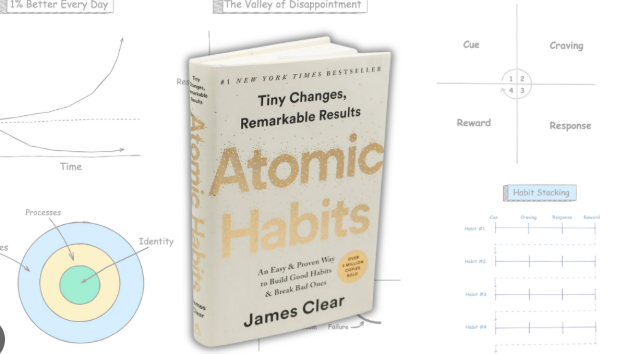
James Clear’s Atomic Habits continues to dominate productivity discussions because of its practical and easy-to-follow advice. The book explains how tiny daily improvements can create extraordinary long-term results.
Instead of focusing only on goals, Clear argues that systems and habits are what truly shape success. This idea resonated with millions of readers because it removes the pressure of chasing massive results overnight.
One of the strongest ideas from the book is identity-based habits. Instead of saying, “I want to exercise,” readers are encouraged to think, “I am someone who exercises.” This small mental shift changes behavior more effectively over time.
The book also introduced the famous “Four Laws of Behavior Change”:
- Make it obvious
- Make it attractive
- Make it easy
- Make it satisfying
Many readers appreciate the book because the methods can be applied to almost every part of life, including productivity, fitness, learning, finances, and relationships.
Deep Work Changed How People Think About Focus
Cal Newport’s Deep Work became one of the defining productivity books of the modern era because it addressed one of the biggest problems of digital life: distraction.
The book argues that deep, uninterrupted concentration produces the highest-quality work. According to Newport, people who master deep focus often outperform others because they can learn faster, think more clearly, and produce better results.
One of the biggest lessons from Deep Work is that multitasking reduces efficiency. Constantly switching between tasks drains mental energy and weakens concentration. Newport encourages readers to create dedicated focus sessions where distractions are completely removed.
To apply deep work principles, many professionals now use techniques such as:
- Time blocking
- Phone-free work sessions
- Focus sprints
- Notification reduction
- Scheduled concentration periods
These methods are especially popular among writers, developers, entrepreneurs, researchers, and students who need long periods of uninterrupted thinking.
Getting Things Done Still Influences Modern Productivity Systems
David Allen’s Getting Things Done introduced one of the most influential organizational systems ever created. The core idea behind the book is simple: your brain should focus on thinking, not remembering tasks.
Allen argues that mental clutter creates stress and weakens productivity. By capturing tasks, reminders, ideas, and projects into a trusted system, people free their minds to focus more effectively.
The GTD system encourages readers to:
- Capture everything
- Break projects into smaller actions
- Organize priorities clearly
- Conduct weekly reviews
- Clarify next steps
Many modern productivity apps and workflow systems are heavily inspired by GTD principles, which is one reason the book remains relevant decades after publication.
Essentialism Encouraged People to Do Less
Greg McKeown’s Essentialism became popular because it challenged the idea that productivity means doing more.
The book teaches readers to focus only on what truly matters while eliminating unnecessary commitments and distractions. McKeown argues that saying yes to everything leads to stress, reduced quality, and burnout.
One of the most memorable ideas from the book is:
“If you don’t prioritize your life, someone else will.”
This philosophy resonated strongly with overwhelmed professionals trying to balance work, family, and personal goals. Instead of maximizing the number of tasks completed, Essentialism encourages maximizing impact.
Readers often connect with the book because it offers a calmer and more intentional approach to productivity.
Feel-Good Productivity Introduced a Healthier Approach
Ali Abdaal’s Feel-Good Productivity became one of the most talked-about modern productivity books because it moved away from aggressive hustle culture.
Instead of promoting pressure and guilt, the book argues that positive emotions improve productivity. According to Abdaal, people often perform better when they feel energized, curious, and emotionally balanced.
The book combines practical systems with psychological research to explain why enjoyment and fulfillment can increase consistency and reduce procrastination.
Some of the key ideas include:
- Sustainable productivity matters more than extreme discipline
- Curiosity can reduce procrastination
- Happiness improves creativity and focus
- Burnout destroys long-term performance
This message became especially popular among younger professionals looking for healthier ways to achieve success.
Productivity Books Are Expanding Beyond Time Management
One of the biggest changes in the productivity category is the growing focus on mental health and human performance.
Newer books increasingly discuss:
- Rest and recovery
- Attention management
- Creativity
- Purpose-driven work
- Digital exhaustion
- Burnout prevention
Books focused on reducing screen addiction and recovering attention have become especially relevant as phone usage continues to rise globally.
Many authors now argue that productivity should support a meaningful life rather than dominate it. Instead of treating people like machines, modern productivity advice encourages intentional living and sustainable routines.
Most Common Productivity Techniques Readers Use Today
Several productivity techniques continue to appear across bestselling books because they are practical and easy to implement.
Also See : Male vs Female Communication: Myths vs Reality – What Really Happens in Conversations Today
Popular Productivity Methods
| Technique | Purpose |
|---|---|
| Time Blocking | Schedule focused work periods |
| Pomodoro Method | Work in short focus intervals |
| Habit Stacking | Connect new habits to old routines |
| Weekly Review | Reflect and reorganize tasks |
| Deep Work Sessions | Protect focused concentration |
| Digital Minimalism | Reduce unnecessary screen time |
| Checklists | Improve consistency and accuracy |
| Second Brain Systems | Organize digital notes and ideas |
These methods are widely used because they help reduce overwhelm while improving clarity and focus.
Which Productivity Book Should You Read First?
The best productivity book often depends on the reader’s biggest challenge.
Recommended Books by Goal
| Goal | Recommended Book |
|---|---|
| Build habits | Atomic Habits |
| Improve focus | Deep Work |
| Organize life and work | Getting Things Done |
| Simplify priorities | Essentialism |
| Reduce burnout | Feel-Good Productivity |
| Control distractions | Indistractable |
| Improve routines | The 5 AM Club |
| Increase effectiveness | The ONE Thing |
| Build consistency | Checklist Manifesto |
| Develop growth mindset | Mindset |
One major trend in modern productivity books is the idea that productivity should improve overall life quality, not just work output.
Readers are increasingly interested in:
- Better relationships
- Improved mental clarity
- More free time
- Better health habits
- Reduced stress
- More meaningful goals
This broader definition of productivity explains why books discussing happiness, rest, mindfulness, and focus continue gaining popularity.
Modern productivity is no longer simply about doing more tasks. It is about doing the right tasks while protecting mental and emotional well-being.
Also See : How Education System Treats Boys vs Girls: Reality, Challenges & What Needs to Change
Conclusion
Productivity books continue to evolve because modern life continues to change. Earlier books focused heavily on efficiency and time management, while newer books focus more on focus, habits, attention, sustainability, and emotional health.
Despite their different approaches, most bestselling productivity books share one powerful message: consistent action, clear priorities, and focused attention create meaningful long-term success.
Whether someone wants to beat procrastination, build better habits, improve focus, organize work more effectively, or create a healthier work-life balance, productivity books offer practical systems that can improve daily life in realistic and sustainable ways.
As distractions continue growing in the digital era, the ability to protect attention, manage energy, and focus intentionally may become one of the most valuable skills a person can develop in 2026 and beyond.